The more ‘knowledgeable’ I get the more I seemingly abandon the idea of certainty. Is there anything that is 100% certain? It would be possible to ask the opposite question (0% certain) but that gets into a different rabbit hole about how we can ‘identify’ what we don’t know. My early blogging, before I started this site, was focussed mainly on systems thinking as applied to my area of work – this is a bit of a return to that type of topic.
Systems Thinking
So What Really IS Important?
We are only a few days into the new year and already items in the news have shocked me – have inspired me – have worried me – have surprised me – have saddened me – have ….. What we find out about the happenings around the globe has the capacity to affect us in a huge number of ways. What about – and this is entirely in keeping with the blog theme – the things we don’t know about?
Shoot The Damn Dog: A Memoir of Depression
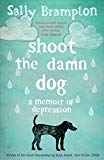
Perhaps not the happiest book to read at Christmas!! I wouldn’t say that I enjoyed reading this book, but I will say that I am glad I read it. It gives an insight into living with and coping with (or not) depression that I would not have expected. Much of it I already ‘knew’ intellectually – however having the story told at first hand – straight from the horse’s mouth, so to speak – carries a huge amount of impact.
Just – WHY?
As we progress through life there is – at least for me – an increasing realisation that there are things that we do – that we enjoy doing – that are seemingly unproductive, unnecessary or just a “waste of time”. Yet we persist in doing them. For some people these can be harmful – to themselves or others – for others they are entirely benign – and yet the question remains – WHY?
Its Not Just Me
With a huge shout out to Confirmation Bias I am always ecstatic (OK maybe that is a bit too strong) when I find that others are speaking similar messages to my own. Have a look at this video – What is the Speed of Dark – and see how it mirrors many of the underlying themes of this blog site.
More On Changing What Is Acceptable
The previous post on acceptability talked about some reasons why things become unacceptable over time and raised a point regarding the width of the “boundary of acceptability”. In this follow up I want to discuss a bit more the grey areas surrounding acceptability – from a number of viewpoints including cultural and personal.
Who Ties The String?
One of the recurring themes of my posts here (the most recent is Someone Is Pulling The Strings Again) is my thoughts on the applicability of the “Red Thread of Fate” – East Asian folklore that is specifically about the way in which we are “bound” to our soulmate, but which I see as a useful metaphor for the way in which we are “connected” to each other in a multitude of ways (perhaps there out to be more colours to denote the ‘nature’ of the connection! We could then have a rainbow world – in whatever dimension that thread resides!!!)
Who Knows?
It is clear that not everything you read online is going to be correct – indeed often it is wise to consider the possibility that nothing you read online is correct. 😀 (and yes – I do appreciate the irony of writing that in a blog post) However, sometimes you come across something that- whilst seeming to be sensible – triggers thoughts about things that are (perhaps) wrong in the real world rather than in the online world.
Challenging The Status Quo
Whenever an innovation occurs there are a couple of things that the innovating authority needs to do in order to ensure adoption. First there needs to be some “market” for the innovation – i.e. a need of some sort – and secondly they need to put forward a convincing case to show that the innovation meets the need.
Serenity
Just at this moment life seems to be very full of “situations” and it is clear that each situation can only be influenced to a limited extent. In some cases that may well mean that no influence can be brought to bear and I don’t think there is any where full control can be applied. For these situations it is crucial that efforts are focussed on what can be influenced – and not wasted on the rest.