Category: "Philosophical"
Ways to go Beyond
|
|
A follow up, in a way, to Science and Spiritual Practices. |

Categories: Faith, Philosophical, Worldview, ----------
Spiritual Science
|
|
Once again back to this recurrent theme of the interplay between spirituality and science. |

Categories: Complexity, Faith, Philosophical, Worldview, ----------
The Conscious Universe: The Scientific Truth of Psychic Phenomena
|
|
A new author for me, but it is clear from the recent books on this list that there is a bit of a theme going on. Haven't got far enough into this book as I write this to pass judgement, however in as much as it is - once again - espousing the idea that consciousness is a big subject that we would do well to understand better then it is likely that I will find much that I like. It is pretty much certain that we can currently say that NO ONE actually knows what consciousness is or how it works - so anyone expressing any ideas on the subject runs the risk of ridicule or worse. I suspect that - for many - the idea that there is something "out there" that in some way connects us and that our own consciousness is more than simply "what goes on inside our heads" will be a bit much to handle. I know that "younger me" would have been tempted to simply dismiss all psi as mumbo jumbo. Now I am not so sure - no, I would go further than that - I am sure that some of the so called "extra sensory perception" that has long been the preserve of the "bizarre" does have a real basis in fact. Looking forward to reading the rest of the book. |

Categories: Cognition, Complexity, Faith, Philosophical, Worldview, ----------
Science and Spiritual Practices: Reconnecting through direct experience
|
|
Anyone who has trawled through this large list of "books I have read" will notice that there are some authors who appear frequently - Neal Stephenson, Terry Pratchett, Robert Harris - and others - and amongst the 'serious" books are many by Rupert Sheldrake. There is a lot of repetition and cross-over within his books - but that is not surprising as what he is really outlining in all of them is his journey towards a very original worldview - and one that I, for one, can take on board as being not too far from my own. Of course. there is a significant risk of bias here - specifically confirmation bias - in that I enjoy reading his books - and get a lot from them simply because they help reinforce my own ideas of "how the world works". Fortunately, he has the education and the science to back up his ideas - something which to a large extent I rely on others for. This book explores seven spiritual practices and shows how they are relevant - whether or not you count yourself as a religious person. It can be difficult in today's society to espouse the idea that you are a spiritual person - many would ridicule that idea. What Sheldrake tries to show is that many actions and behaviours which are practiced by people on all parts of the religious spectrum from the most devout to the most sceptical are driven by "spiritual" needs. To combine some of the practices in a 'worldly' example - many people make 'pilgrimages' each week to support their football team where the take part in the set of 'rituals' which form part of the event and they 'sing and chant'as part of the crowd and are 'grateful' for every win that their team delivers - some may well off some form of 'prayer' when one their players steps up to take a penalty. I could probably have worked in the other two - 'connecting with nature' and 'relating to plants' but I decided that I had probably pushed the envelope far enough. A book to be recommended though. |

Categories: Cognition, Complexity, Faith, Philosophical, Worldview, ----------
The Five People You Meet in Heaven
|
|
I read this very quickly - and it was both thought provoking and slightly disappointing! The central thesis resonates strongly with my own outlook which can be found throughout the blog entries that there are lots of interconnections in our lives that we know little about - I could link to some of the specific entries that explore this but it permeates so much - whether it is external events that impact on our lives or ourselves unwittingly causing a change for someone else there are lots of "unknowns". Unfortunately, in my view, although the book supported this view it didn't add very much to my ideas - that was the disappointing bit - but it did at least give five illustrations of how there can be parts of "our story" that we don't know about. |

Categories: Complexity, Faith, Philosophical, Worldview, ----------
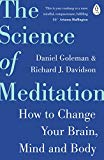
The Science of Meditation: How to Change Your Brain, Mind and Body
|
|
After a Rebus binge it is time for a 'serious' book - a return to non-fiction and the excellent Dan Goleman. Looking forward to exploring the "realities" of meditation and popular branches of that like mindfulness. |
Categories: Cognition, Philosophical, Health, ----------
Origin
|
Typical Dan Brown page turner. Good to read, easy to read - not too taxing! |

Categories: Faith, Fun, Philosophical, Worldview, ----------
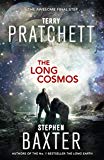
The Long Cosmos
|
|
The next (and last) step (so to speak) in this rambling exploration of parallel worlds. Plenty of food for thought in the whole series - as long as you don't require 'answers'. Not that the reading date of this is approximate as I can't remember precisely when I read it. |
Categories: Cognition, Complexity, Fun, Philosophical, Systems Thinking, Worldview, ----------
Biocentrism
|
Another 'serious book' - and one that was interesting for quite different reasons. I still don't know what consciousness is - how it comes about, but this book gives an interesting - if perhaps slightly biased - view which attacks the mainstream physics view |

Categories: Cognition, Philosophical, Systems Thinking, Worldview, ----------
Thought Vibration
|
A short book - only 105 pages. An old book - written in 1906. A fascinating book - in a time when these sort of ideas are being resurrected by the likes of Rupert Sheldrake and his morphic fields this is a real insight into a way of thinking that was seemingly abandoned - at least by mainstream thought - for much of the 20th Century. Proves once again that it is often wrong to assume that "no one has thought of this before" about ANY subject. |

Categories: Cognition, Philosophical, Worldview, ----------